
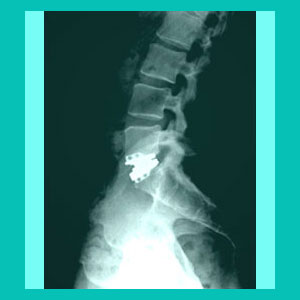
Replacing worn and injured intervertebral structures with artificial discs is one of the newer and more promising forms of herniated disc surgery. There are currently many types and designs of artificial replacement spinal discs in use, in clinical trials or in development.
There are 2 distinct variations when it comes to disc replacement surgery. The first option removes only the nucleus of the natural disc, and seeks to substitute a synthetic replacement, while leaving the organic annulus fibrosus in place. The second and truest form of disc replacement removes the entire natural disc and replaces it with a single or multi-piece prosthetic substitute.
This essay will provide some basic information about artificial spinal discs and how they can be used to solve disc degeneration and intervertebral prolapse pain syndromes.
What are Artificial Discs?
Artificial intervertebral discs are man-made medical devices which are used to replace organic discs that have been damaged by injury, herniation or degeneration. The technology used to perform disc replacement surgery is fantastic and the philosophy of the approach is so much more enlightened than other methods of operating on the spine. Most importantly, disc replacement seeks to maintain normal spinal function and structure, while other procedures seek to alter the spinal anatomy and limit functionality.
The current standards of disc operations include discectomy and spinal fusion. Both demonstrate some serious shortcomings, which helps to explain their poor treatment results in so many patients.
Prosthetic discs are being hailed as the future of spinal surgery, which might be a very good thing indeed for patients who actually need operative interventions.

Designs of Prosthetic Discs
There are so many different approaches to artificial replacement disc design. There are one piece styles, two piece styles and three piece styles. There are discs manufactured completely of metal, such as titanium, and other styles which feature a softer and sometimes replaceable core materials. There are discs with internal springs and others with rubberized components. There are even cutting edge artificial disc nucleus replacement devices designed to repair the worn out nucleus pulposus while utilizing some or all of the organic annulus fibrosus structure.
The problem with artificial spinal discs is that there seems to be a million different ideas as to which device might best imitate a healthy organic disc. These ideas will take years, and perhaps even decades, to produce quality verifiable results.
Most devices show promise and eventually, the technology will be perfected, facilitating disc replacement surgery which has a good chance at solving a variety of painful structural conditions.
Guidance on Artificial Discs
Remember, just because the new disc replacement operations are better than traditional herniated disc surgery procedures, these techniques are still invasive and demonstrate a variety of inherent risks. Surgery of any kind is rarely indicated for any back pain condition and demonstrates some of its worst curative statistics for resolving disc-related pain.
Treating most herniated discs or degenerative disc disease using surgery should be arduously avoided and left for the most dire of circumstances. If surgery is truly the only option left, then disc replacement might be a good choice for you to consider. If there is any other nonsurgical solution, seek it out before even thinking about an operation.