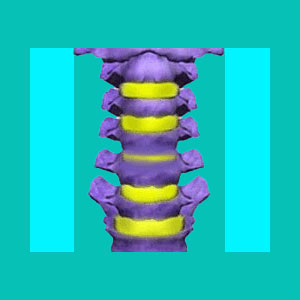
A collapsed disc is a diagnostic term used to describe an intervertebral spacer which has lost its mass and height, due to either a herniation or degenerative disc disease. Disc collapse comes in varying severities and may or may not produce pain and associated symptoms in any given affected individual. In fact, decrease in disc size and mass is considered completely normal and universal in typical human adults.
The scope of this essay will explore the reasons why an intervertebral disc may collapse and the effects this deterioration of the intervertebral structure may have on the overall spinal anatomy.
What is a Collapsed Disc?
A normal healthy disc has enough height and circumference to adequately maintain the intervertebral space between spinal bones. As we age, it is usual and completely expected that discs will lose some or most of their height and circumference, due to the effects of disc degeneration.
Discs dry out and shrink as they age, providing less cushion between individual vertebrae. This loss of moisture in the nucleus is one of the main causes of a disc collapse. The medical term for this occurrence is disc desiccation, which simply means that the nucleus has dried up considerably.
Herniated discs can also make a disc lose height and/or circumference if a sizeable portion of the nucleus pulposus is pushed out between the spinal bones. Ruptured discs will usually entail a loss of some or all of the nucleus pulposus, as it leaks out from the annular tear in the outer disc wall. Either of these conditions can create effective disc collapse.

Spinal Disc Collapse
The term collapse is not actually accurate for most herniated or degenerated discs. Herniated discs are not collapsed. Instead, they have suffered a displacement of part of the internal disc nucleus, causing them to change shape and most often, lose height. Herniated discs might be painful if caused by trauma, but are not usually the causation responsible for enduring chronic back pain.
Degenerated discs do not typically collapse either. They shrink in both height and diameter, but this process is normal and part of the aging cycle for every human spine. Very few degenerated discs pose a significant source of pain or potential health hazard.
However, it should be noted that the process of disc desiccation will escalate the osteoarthritic processes and will create the ideal environment for bone spurs to form on the spinal joints, the vertebral bodies and possibly, in the central or foraminal canals. This may cause pain in some patients and/or neurological deficits in others.
Collapsed Disc Help
Remember to maintain objectivity when considering the state of your spine. Sure, you might have degenerative changes and you might also have experienced one or more herniated discs. So what? Almost every adult will demonstrate noticeable spinal degeneration and many will also have one or more disc herniations. Most of these conditions cause little or no pain, although they are commonly blamed for a host of dorsopathy syndromes.

Research has shown no definitive correlation between disc pathologies and the incidence of back or neck pain. This is a crucial finding.
Do not rush to conclusions and blame your discs for enacting back pain, without considering the alternate possibilities, as well. There are sometimes many more explanations which often make far more sense, especially for patients who have endured countless unsuccessful disc pain treatments.
Why not save yourself the trouble of another treatment failure and think about these possibilities first?
Remember, without a definitive causative process for pain, such as verified nerve compression or severe stenosis, the demonstration of a herniation or degeneration is likely to be coincidental to any symptoms suffered. Talk to your spinal neurologist for more information on ascertaining the actual reason for your continuing suffering.