
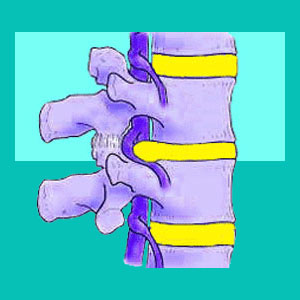
A diffuse disc bulge is a medical diagnostic term often substituted for the more commonly seen broad based herniated disc, although technically, there can be some differences. Diffuse simply means spread out, which is appropriate for this particular type of bulging disc, since the affected portion of the structure is indeed spread over a large area, much like a broad-based herniation. Diffuse herniations may cover a large portion of the disc circumference, typically between 25% to 50%, but sometimes even more.
This article will detail the difference between diffuse intervertebral bulges and other typical varieties of disc prolapse, including focal bulges. We will explore how the shape of these herniated discs may influence their symptomatic presentation.
Diffuse Disc Bulge Explanation
Diffuse bulges represent herniations in which the bulging area of the disc is considerable when compared to the overall size of the intervertebral structure.
Sometimes, these herniations are classifiable as being central herniated discs, posterolateral herniated discs or even far lateral herniated discs, but occasionally, these large bulges may defy exact classification, since they tend to bulge in many directions at once.
Diffuse bulges are no more dangerous or problematic than any other type of herniation, although they typically do present more opportunities to affect neurological structures due to their large size and multi-directional facing. However, since width is the primary characteristic of diffuse bulges, the projection of the herniation may not be sufficient to adequately affect the nerve roots or spinal cord, which is a very good thing indeed.
Diffuse Herniated Disc Description
Diffuse disc protrusions most commonly affect the central canal and one side of the lateral recess, possibly including the foraminal space. Some tend to the left and others to the right, while a few are bidirectional.

Many diffuse bulges are implicated in touching the thecal sac or even displacing the spinal cord when central impingement is extreme. Others are said to be guilty of enacting foraminal stenosis or even creating pinched nerves when the posterolateral or far lateral directional bulges are extreme.
It is crucial to know that most bulges are mild to moderate and not symptomatic in anyway, although some larger or more severe bulges may truly cause symptoms based on structural criteria alone.
Diffuse Bulging Disc Synopsis
Diffuse herniated discs represent just another name used to classify the many varieties of bulging intervertebral discs. Most patients become familiar with the term diffuse disc protrusion by seeing it on their MRI report, even though they may not be sure what the actual classification means.
I am always delighted to see patients reading such specific pages as this one, as it proves that these particular back pain sufferers are taking my long standing advice to learn all they can about their diagnosis and become involved in their own care. This is always a great step in the right direction towards finding a real and lasting cure for their disc pain issues.
Herniated Disc > What is a Herniated Disc > Diffuse Disc Bulge