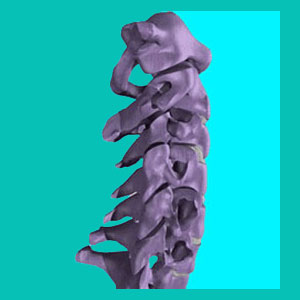
Disc degeneration describes the processes which affect the intervertebral discs as we age. Degeneration is a normal part of the spinal lifecycle. While degeneration might play a role in the creation of some problematic and painful conditions, it is generally a benign process which is simply an expected part of life.
This article will identify and detail the various degenerative processes which affect the spinal discs. We will also explain why intervertebral degeneration is blamed for causing pain unfairly in many patients.
Disc Degeneration Explained
I know the term degeneration sounds really bad. However, it really just means that age and lifestyle factors have changed the condition of the spinal discs. Discs dry out and shrink as we get older, losing height, diameter and circumference. Degeneration is most prevalent in the cervical and lumbar areas of the spine, since these are the regions which demonstrate the most vertebral movement. It is common for adult patients to experience mild to moderate degenerative changes in these spinal zones by the age of 30 and sometimes, even earlier.
Another common name for intervertebral-specific deterioration is disc desiccation.
Degenerated and Herniated Discs
Spinal discs are more prone to herniate as they dry out, although these bulges and ruptures are typically less symptomatic than herniations in a healthy moisture-rich disc. This makes sense, since a healthy disc has more nucleus pulposus material to pressure the outer annulus fibrosus, creating a larger bulge and applying additional force to any sensitive neurological tissues affected by the herniation.

Degenerated discs have already lost a significant amount of moist nucleus pulposus tissue and typically bulge without causing any health issues whatsoever. Many ruptured degenerated discs actually calcify quite rapidly, which often stabilizes the affected vertebral level and prevents painful symptoms from occurring. Of course, if this calcification occurs around an affected nerve root, this can cause or intensify a preexisting pinched nerve or sciatica syndrome.
Disc Degeneration Factsheet
Degeneration of the soft disc tissues typically increases similar age-related effects on the actual vertebral bones. These spinal arthritic processes can cause osteophytes to form, which might cause some painful symptoms if they occur near neurological tissue.
Foraminal stenosis can occur if bone spurs form around the neuroforaminal openings between vertebrae and osteophytes can exacerbate a facet joint syndrome condition, as well. Some of the worst expressions of osteoarthritis may occur within the central spinal canal, causing spinal stenosis. Most arthritic change is not worrisome and will either be asymptomatic or only mildly symptomatic in most patients.
If you have been diagnosed with degenerated discs, do not be surprised. You can actually tell your doctor you already know that you have degeneration, since it is normal and an inherent part of the aging process.
If degenerated discs are the only basis to explain your chronic back pain syndrome, there is a very good chance that you have been misdiagnosed. Remember, mild to moderate disc changes are normal, not typically painful and generally no cause for alarm.
Herniated Disc > Degenerative Disc Disease > Disc Degeneration