
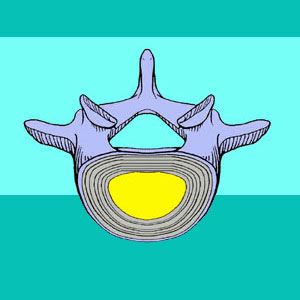
Discogenic pain is another very controversial diagnosis in the back pain treatment arena, involving discomfort which is suspected to emanate from the disc structure itself. Although the theory of this condition might make sense to some doctors, others find the diagnostic criteria to be less than exacting and a great number of physicians believe that it is likely to be one of the most misdiagnosed dorsalgia concerns.
This article will examine the theory of how disc pain occurs in relation to the small nerves which exist in the cartilaginous endplates. Additionally, we will expose the basic fact that the expressed symptoms often do not seem to make sense based on clinical expectations.
Discogenic Pain or Disc Pain
Pain which is described as being discogenic means that the source of the discomfort resides within the disc itself. This seems illogical, since intervertebral discs do not have any interior nerve tissues or blood vessels.
Patients with herniated discs are usually told that the disc itself is not painful, but the material bulging out of the disc is causing pain due to a pinched nerve or spinal stenosis condition.
Most patients with degenerative disc disease are told that their pain is also caused by some form of nerve compression, either due to the narrowed intervertebral space or associated spinal osteoarthritic changes. So what is the theory behind pain which is considered discogenic and how does it make sense?

What are Disc-Sourced Pain Symptoms?
Symptoms which are called discogenic are usually diagnosed when pain is obviously affecting a given spinal area which is free from herniations or significant degeneration.
Spinal discs have no blood vessels and no nerve endings in them. However, they are secured to the vertebrae above and below by what are known as cartilaginous endplates. These endplates do have tiny nerve endings, which are the structures blamed for discogenic symptoms. Even though these nerves are miniscule, they are often targeted as the source of far ranging and debilitating back pain.
Usually, the working theory of pain involves these small nerves growing into the disc itself, through an annular tear. In some other circumstances, the proteins inside the disc nucleus might be theorized to be leaking unto the external endplate nerves. Regardless, this interior disc protein contains a substance known as tumor necrosis factor-alpha, the suspected cause of chemical irritation of these tiny nerves.
Pain would be expected to be highly localized and minor to moderate, if this does occur. When patients demonstrate significant and wide-ranging pain, the condition is likely to be unenlightened as a valid diagnosis. Thus explains the controversial nature of how this diagnostic theory applies to so many patients.
Suggestions for Treating Discogenic Pain
Personally, I do not subscribe to this theoretical explanation in the majority of cases where it is pronounced, since the symptoms just seem too diverse to possibly make any real sense. These tiny neurological structures are not likely the source of any debilitating symptoms in most diagnosed patients. For patients with more expected symptomologies, the discogenic theory seems much more logical.

If you have been diagnosed with discogenic symptoms, you had better learn the facts about the spinal anatomy and the likely sources of severe back or neck pain. I am sure that your research will lead you to discover that these tiny nerves are most likely innocent.
Do not be dismayed. You might be merely one of millions who are misdiagnosed every day within the healthcare system. However, if the symptoms do correlate in location and intensity, the diagnosis may be sound. Unfortunately, there are no nonsurgical treatments which are known to be universally successful and many cases which enjoy surgical intervention do not resolve, despite multiple procedures.