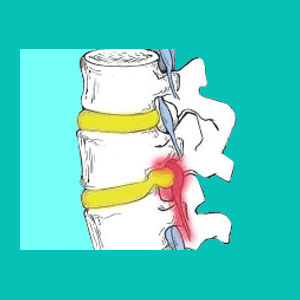
An extraforaminal herniated disc is another name for a far lateral disc protrusion. Other commonly used names for this somewhat rare disc issue include: extracanalicular disc herniation, extraforaminal disc bulge and extraforaminal disc protrusion. Like all manner of herniated spinal discs, the extraforaminal variety is usually nothing to worry about, but in rare cases, can actually cause a pinched nerve at the level above the disc abnormality. This is an unusual symptomatic presentation that defies the usual rule of herniated disc pain.
The scope of this essay will delve into explaining extraforaminal disc prolapse and the reason why they are so enigmatic in many back and neck pain sufferers.
Extraforaminal Herniated Disc Description
Far lateral herniated discs describe bulging intervertebral disc conditions in which the herniated portion of the structure exists outside of the spinal canal. This makes the condition innocent of causing central spinal stenosis, since it does not exist anywhere near the central spinal canal. In most cases, the herniated portion of the disc does nothing to elicit pain; it simply exists.
In a few cases, particularly in the lower lumbar spinal region, the herniated portion of the disc structure may impinge upon or compress the nerve root above the affected level, potentially causing weakness or numbness in the areas served by the trapped nerve. This can create a diagnostic puzzle for some inexperienced or careless care providers.
Extraforaminal Disc Prolapse Treatment
Many herniations, extraforaminal or not, require no specific medical care or treatment whatsoever. In fact, widespread and diverse research clearly shows that no treatment often produces better results than any specific form of treatment. This is a very sad statistic indeed!

For patients who do require medical care, conservative measures are unlikely to provide a cure, but herniated disc surgery may resolve the symptoms when the diagnosis is 100% correct (rare) and everything goes well during the operation (rarer still).
Always apply all the facts about herniated discs to whatever type of protrusion you have been diagnosed with, in order to better your chances for symptomatic resolution and avoid the common trap of misdiagnosis.
Extraforaminal Herniated Disc Analysis
Extraforaminal disc protrusions can be a challenge to accurately diagnose, even more so than other types of typical bulging discs. They do not always image accurately or clearly, sometimes puzzling doctors and patients alike, when no particular suspected causes of pain are found that correlate to the exact anatomical locations of the symptoms expressed.
In other instances, the herniation is crystal clear, but the symptoms still do not correlate by location or expression, since the affected nerve root is not the same level as the observed herniation.
Remember that when therapy is needed, many non-surgical measures may work well in some cases, including spinal decompression for contained disc herniations. To learn more about these possibilities for treatment, contact a local DRX9000 or AccuSpina center for information.
Herniated Disc > What is a Herniated Disc > Extraforaminal Herniated Disc