Inversion for herniated discs is a historical treatment option which dates back thousands of years. Inversion has actually been used to treat many health concerns, in countless cultures around the world. While inversion has been contraindicated for use as a neck or back pain treatment by many doctors and therapists, some suffering patients still swear by the curative benefits they have received using simple inversion techniques.
This investigative essay will provide a glimpse into the use of inversion therapy to treat pathological intervertebral disc conditions at home. We will examine the potential risks and rewards of this all-natural therapy option.
Inversion for Herniated Discs Theory
Inversion therapy consists of being suspended upside down, to one degree or another. Patients may be nearly horizontal, with just a slightly increased leg compared to head height on the table, or may be fully vertical, with their head pointing straight down and their feet pointing towards the sky.
Inversion theory states that taking pressure off the spine and reversing the effects of gravity will help remove compression in affected vertebral levels. In fact, many advocates describe how they have maintained a healthy mind and body using little more than daily inversion to battle the effects of aging and skeletal degeneration.
While the idea of inversion makes sense, it is difficult to control how and where the reverse force of gravity is enacted on the bodily structures. There is no way of determining if the effects will benefit a specific area of the back. Additionally, the amount of force applied is virtually impossible to control by the practitioner.

Inversion Systems for Bulging Discs
The 2 most common methods of inversion therapy consist of boot and rack systems and inversion tables.
Boot and rack systems literally hang a person completely upside down from their feet, using specially designed footwear and a supportive restraining device. This type of inversion is rarely used by herniated disc patients, since the process of inverting using boots requires good fitness and a pain-free body to achieve. Some systems integrate a revolving support rack, allowing the user to strap themselves in while standing and then invert using a control on the rack. This type of device is closer to a full inversion table, but is usually available at a lower cost.
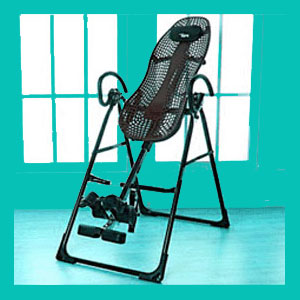
Far more common for home use by patients with herniated disc pain are the full inversion tables which do much more to support inverted individuals during treatment. These rotating tables allow a user to recline supine and then raise their feet and lower their head using easily accessed controls on the device. A quality inversion table can be an expensive investment, with tables ranging in price from several hundred to several thousand dollars.
Using Inversion for Herniated Discs
I tried inversion both for back pain treatment and fitness applications. I found no pain relieving benefits from the practice and discovered that it was more trouble than it was worth for improving abdominal and core muscle strength. A variety of simple crunches accomplished the same goals without all the time and expense involved in inversion training.
While some patients really extol the benefits of inversion, I am not convinced. I like the idea of modern spinal decompression using a machine like the DRX9000 or VAX-D much better.

Remember, inversion can also be risky. Hanging alone upside down is never a good idea. Patients who are in pain are especially advised to always have someone to help them if they get stuck or faint. Inversion can be dangerous for patients with some specific health conditions and anyone interested in using inversion to cure their back pain should talk to their doctor before beginning even the most basic attempts at treatment.
As a perpetual critic, who has seen the actual financial motivations for so many treatment recommendations, I can offer this advice based on personal and professional experience:
If your doctor or chiropractor endorses inversion, and just so happens to sell the equipment, either directly or through an affiliate arrangement, then you just have to question whether the treatment is actually right for you or is just another way for these greedy soulless types to make even more money from your continuing suffering.
Herniated Disc > Herniated Disc Treatments > Inversion for Herniated Discs