
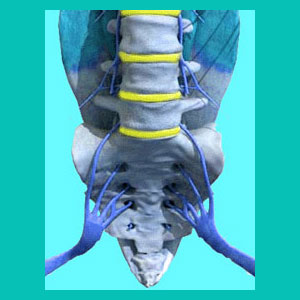
Lumbar herniated disc causes include the possibility of intervertebral bulges which occur due to normal or accelerated spinal degeneration, prolapsed discs which are enacted by traumatic injury and purely idiopathic disc herniations.
There are very few cases in which a definitive causative process can be identified as creating a herniated disc. This is because many disc pathologies exist for a very long time without being identified, since they do not cause any pain. This can really make it difficult for specific herniations to be dated or traced to a specific injurious event. Remember, most herniations are idiopathic or result from normal and expected spinal degeneration processes which affect every adult on the planet. Only a minority of herniations are directly caused by injury and in these instances, one would require comparative imaging studies to show no herniation prior to the traumatic event and subsequent definitive injury afterwards.
The scope of this article will detail why it is virtually impossible to prove the origin of any spinal disc herniation. We will, however, discuss the factors which likely cause disc protrusions in most patients.
Degenerative Lumbar Herniated Disc Causes
Spinal aging consists of disc desiccation and spinal arthritis, among other expressions. These conditions are normal, expected and universal in the human species and start in our first 2-3 decades of life. You certainly do not have to be old to suffer mild to moderate, or even advanced, spinal degeneration. Most people have noticeable to moderate degenerative changes in their spines by the age of 30 and a great number demonstrate these exact same changes much younger.
The degenerative processes in the spine facilitate herniations, which explains why bulging discs are so common. Many discs will herniate slowly as we age and others will be more prone to spontaneous herniation if they are exposed to sudden significant force.

Since degenerative herniations might develop gradually, there may be many in transition in the spine at any given time. Trauma might accelerate their development, but it is difficult to pinpoint this occurrence in any particular patient without the previously discussed before and after imaging studies for comparison.
Injury Causes Lumbar Herniated Discs
Spontaneous traumatic injury presents the greatest chances for symptomatic herniations. Any injury is likely to hurt and concentrated force which is great enough to herniate a disc is likely to elicit pain in the surrounding muscles, tendons, ligaments, nerves and other tissues, as well. The disc itself will not feel pain, since it does not have internal neurological tissue.
Even symptomatic injured discs will typically calm down and resolve without any special care within 2 to 8 weeks on average. For perennial disc pain conditions, the accident or traumatic event may have started the pain, but the symptoms might be continued through an ischemia process, rather than an unresponsive injury. Remember, the body’s most basic skill is healing.
Objective View of Lumbar Herniated Disc Causes
Herniated discs in the lower back are the most common of all intervertebral pathologies. These events are so common that they affect more people than not. Many lumbar herniations exist for many months, years or decades and are never discovered, since they do not create pain. However, if the person gets in an accident, imaging will reveal the disc irregularity which is then blamed on the traumatic event. This is often ludicrous, since degenerative changes in the surrounding vertebrae will clearly show that the herniation may be old.

If you are suffering from a lumbar herniated disc, do not be surprised that it is there. These spinal abnormalities are par for the course in life and take the unfair blame for enacting symptoms far more than they actually do.
Misdiagnosis is rampant in the back pain community and there is no single scapegoat used more often than the bulging lumbar disc. A good rule of thumb states that structural disc issues usually respond well to treatment, while misdiagnosed discs typically result in many failed attempts and chronic pain. So, given this knowledge, what type of pain do you truly have?
Herniated Disc > Herniated Disc in the Lower Back > Lumbar Herniated Disc Causes