
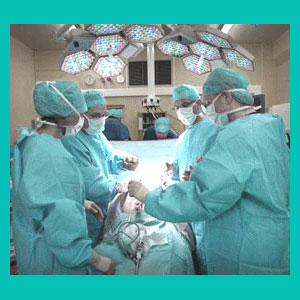
Minimally invasive herniated disc surgery has become the industry standard in the US and in many other technologically well developed areas of the world. Minimally invasive procedures are always recommended for patients who qualify, since they do less damage to healthy tissues and allow a faster and more complete recovery when compared to fully open surgical techniques.
This dialog will cover the topic of minimally invasive surgeries used to treat a variety of disc pathologies. We will detail the advantages of minimally invasive techniques and why patients should always investigate these less damaging options if and when they require an operation.
Types of Minimally Invasive Disc Surgery
There is a wide range of procedures available and virtually every major variety of traditional herniated disc surgery has a minimally invasive counterpart. Some of the most common types of procedures used to correct disc pain conditions include:
A hemilaminectomy is the minimally invasive procedure favored by most physicians. This is almost always a poor choice of operation for degenerative disc disease or herniated discs, since it offers poor curative results. Laminectomy is best for arthritic or congenital narrowed central canal conditions.
A microdiscectomy or microendoscopic discectomy is a common treatment for herniated discs. Results are better than laminectomy, but still not very good. Re-herniation is a big problem, even when the procedure would otherwise be deemed a success.

Artificial disc replacement is perhaps the best surgical option, since it maintains normal spinal function. This operation is usually performed using an anterior approach for the least damage possible to the spinal anatomy.
IDET and nucleoplasty are always truly minimally invasive and might offer some patients a good chance at a cure with the least degree of surgical risk.
Radiofrequency lesioning will not actually treat the herniation specifically, but this approach can help to minimize symptoms which may be caused by the bulging intervertebral structure long-term.
Minimally Invasive Herniated Disc Surgery Techniques
There are several differences between traditional full open surgical procedures and their minimally invasive counterparts. Generally, minimally invasive operations do not utilize large surgical incisions in the back. Instead, they commonly use several small incisions placed in the abdomen or side. The need to dissect multiple layers of back muscle is avoided and any muscular tissue which is encountered is typically pushed aside, rather than cut.
Finally, minimally invasive procedures try not to disturb surrounding healthy tissue and concentrate on only changing a small affected spinal area, using the latest in high-tech surgical tools. Lasers, fiber-optics, and catheter placement of specialized surgical tools are all important components utilized in minimally invasive procedures.
Minimally Invasive Herniated Disc Surgery Advice
Although I am a severe critic of any form of back surgery, especially those used to treat herniated and degenerated discs, I still acknowledge the need to develop the technology to become the best it can be.

Minimally invasive surgical techniques are a vast improvement over traditional open back surgeries. There is less collateral damage and a better chance for symptomatic resolution. The patient has a faster and more pleasant recovery, with less chance of experiencing permanent functional limitations or restrictions.
If you are considering surgery, I highly recommend using a less invasive option compared to a traditional full open technique. That being said, I must at least mention the fact that surgery is generally a horrible option for disc conditions and often intensifies the pain, rather than relieving it.
Just ask any person suffering from failed herniated disc surgery syndrome what they think about back surgery and I am sure you will get an earful.
Herniated Disc > Herniated Disc Surgery > Minimally Invasive Herniated Disc Surgery