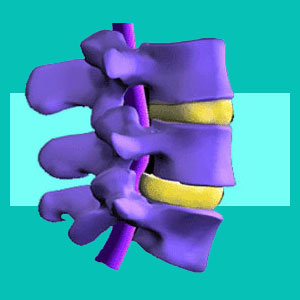
A slipped disc is a common colloquial term for a herniated disc. The name is actually not very accurate, being that the term gives the impression that a disc somehow moves out of place in the spine. Intervertebral discs are firmly attached to their respective vertebrae by strong cartilaginous end plates, so they can not and will not ever slip. However, the interior of the disc, called the nucleus pulposus, can herniate out of place or even rupture completely out of the disc structure. When this occurs, it seems that the disc has moved out of place, but in fact, it is only part of the nucleus which has been displaced.
This essay explains the actual occurrence of intervertebral herniation and dispels the myths surrounding slipped spinal discs.
Slipped Disc Definition
The name disc slippage was far more common many years ago, when doctors did not have such a clear idea of the reality of a herniated disc condition. Prior to the discovery of advanced diagnostic imaging techniques, such as the CT scan and MRI, the most common method of detecting a disc condition was by using an x-ray film.
Discs do not show up on an x-ray, being that they are made up of soft tissue. Therefore, a severe herniated or degenerated disc would appear like an absence of space in between vertebral bones. This absence of space looked as if the disc somehow mysteriously moved out of place or slipped; hence the name used.

Can Spinal Discs Slip Out of Place?
Discs will not simply move out of place in the spine. The outer disc wall is attached to the vertebrae above and below it with incredibly strong bonds. However, degenerative processes can erode the outer annulus fibrosus, allowing the soft interior nucleus pulposus to bulge out of place or even leak out of the disc completely. Injury can also cause these events to occur suddenly and sometimes very painfully.
There is nothing inherently problematic about most mild to moderate disc herniations, but some can pose a real pain issue for a minority of patients.
Some disc herniations never cause any symptoms and usually go unnoticed. Other herniations cause pain for a short time, but most often resolve without any special medical treatment.
A few herniations can cause severe and chronic disc pain which requires treatment and occasionally even drastic or even surgical interventions.
Slipped Disc Experiences
I clearly remember my mother using the term slipped disc to describe the condition that affected her lower back. As a child, I knew my mom had a long history of lower back problems and even had endured a laminectomy before I was born. She had also told me that her father had a similar condition and used to have to sleep on the floor because of chronic back pain. I never understood what this condition was all about, until I developed horrible back pain myself at age 16. Then it all became all too clear…

When I found out I had 2 herniated discs and degenerative disc disease a short time later, I was devastated. Thus began my epic battle with back pain, which has lasted virtually my entire adult life. My best years were wasted in pain and misery, never knowing when my disc condition would strike me down into a state of utter disability.
Luckily, I learned the facts about herniated discs and have been better prepared to deal with my pain ever since. This is a very good thing, since now I have a total of 12 herniated discs in my spine.
If you have been diagnosed with a slipped or herniated disc, you too must understand the big picture when it comes to back or neck pain and effective treatments. Only then will you have the chance to break free from the constant suffering and finally find a permanent cure for your misery.
Slipped disc pain can be relieved forever using our proven pain relief program. Best of all, this acclaimed program can be accessed 24/7 worldwide for immediate help right now.