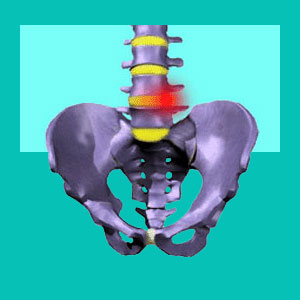
Suffering a lumbar herniated disc is actually a typical occurrence, since the lower back is the most common area to experience both bulging discs and degenerative disc disease. The lumbar spinal region has a reputation as being easily injured and prone to experiencing chronic pain. However, although lower back pain is an epidemic condition, the fact that most lumbar disc abnormalities are completely asymptomatic comes as a great surprise to many diagnosed individuals.
This essay will delve into the diagnosis of lumbar herniations as the source of lower back pain and provide some eye opening truths which are crucial for any lumbar dorsalgia sufferer to know.
Causes of a Lumbar Herniated Disc
Disc herniation in the lower back can be caused by injury or spinal aging. Injury to the lower back typically affects the muscles and other soft tissues, due to overexertion or mild trauma. However, a seriously damaging event can result from any severe trauma, such as a sports injury, car accident or lifting injury.
The usual locations for a lumbar herniated disc are at the L4/L5 and L5/S1 vertebral levels. These happen to be the 2 discs which first herniated in my own back and the L5/S1 eventually ruptured, as well.
Spinal aging causes extensive degenerative changes in the lumbar region. The lower back must bend and flex constantly, as well as bear the weight of our bodies during a full range of athletic activities throughout our lives. This makes the normal degenerative processes, such as spinal osteoarthritis and lumbar degenerative disc disease, especially prevalent in the lower lumbar area.
People associate spinal degeneration with old age, but in the lumbar region, this is simply not the case. In fact, most people have mild to moderate spinal degeneration in their lower backs by the age of 30 and many experience these changes far younger. I was diagnosed with disc disease at the age of 16.

Herniated Lumbar Disc Symptomology
Any herniated disc which results due to traumatic injury can be painful. Luckily, these symptoms usually heal, with or without treatment, in a matter of 6 to 8 weeks, on average.
During the acute phase, patients might experience severe localized and radiating pain. Tingling, weakness or numbness in the affected area, or in the lower limbs, often indicates neurological involvement caused by the bulging disc or stemming from another consequence of the injury. Sciatica is the correct name for nerve related symptoms in the lower body, legs and feet.
Herniated discs which occur due to advanced degenerative changes are rarely symptomatic, even when they initially happen. Most of these herniations occur quietly and without causing any pain or related symptoms. In fact, most are not even discovered for many years, since they do not cause any problems.
Lumbar Bulging Disc Misconceptions
The lower back bears a huge burden in many ways, since it is responsible for maintaining our upright posture, as well as providing the majority of our muscular strength. The muscles in our lower backs and buttocks are indeed the strongest in our bodies.
The lower back is thought to be a delicate structure and the site of ongoing pain concerns for many individuals. However, the lumbar spine is actually ultra strong and resilient. Chronic structurally-induced back pain in the lower back is rare, although idiopathic and ischemic back pain add up to a literal epidemic.
The postural muscles in the lower back are working virtually 24 hours a day to support our bodies and feature different types of muscle fibers which are best for endurance activities. These types of fibers can be greatly affected by common oxygen deprivation caused through an ischemic back pain process.
This regional ischemia is the actual cause of some chronic herniated disc pain syndromes, rather than the disc itself. Although the herniated disc is there, it is not the actual source of pain. It is simply being used as a scapegoat, since the painful condition has been misdiagnosed. This is the #1 reason why so many lower back pain patients never recover.

Lumbar Herniated Disc Help
I was diagnosed with lumbar DDD at 16 and diagnosed with 2 herniated discs in my early twenties. I suffered with these conditions for many years and endured a seemingly endless barrage of tests, treatments and therapies. Nothing helped my pain and my symptoms actually grew worse every passing year.
I was so frustrated by this ordeal and by the cluelessness of my care providers. Every doctor thought they had the solution and enrolled me in their answer to my pain problem at significant financial cost. When the program failed, as they all did, the doctor would typically shrug their shoulders and have an “Oh well, I tried” attitude.
Unbelievable.
Despite huge variations in treatment and care approach, not one doctor, chiropractor or therapist ever deviated far from the original diagnosis. All of them simply accepted that the herniated discs must have been the source of my pain. Of course, I had no idea that disc conditions rarely cause ongoing pain, since none of these doctors ever mentioned it to me. Thankfully I began to do independent research and discovered the truth.
Once I learned the truth about lumbar herniated discs, it did not take me long to discover that my pain was due to ischemia all along. I used knowledge therapy to end my pain and have enjoyed many years completely pain-free, despite still having the disc issues.
If you have a diagnosed lumbar herniated disc and can not find relief, I implore you to reconsider your diagnosis, rather than simply keep changing treatments. This is the key to recovering from a lumbar herniated disc for millions of people. An objective spinal neurologist can help to be sure you are on the right path towards a cure, instead of wasting time and money for nothing.
More people with lumbar herniated discs enjoy complete relief from our proprietary program than any other diagnosis. Get immediate help worldwide 24/7 with our ultra-effective Cure Back Pain Forever Program.
Herniated Disc > Herniated Disc in the Lower Back > Lumbar Herniated Disc