Cauda equina syndrome is defined as acute compression of more than one of the lumbar and/or sacral nerve roots within the central canal. This nerve compression condition is a medical emergency which must be handled by an experienced care practitioner. Virtually every case of cauda equina presents a dire situation for the patient, who should seek assistance from a hospital emergency room immediately.
This discussion will describe what causes cauda equina compression, detail the symptoms of CES and provide guidance on indicated treatments.
What is Cauda Equina Syndrome?
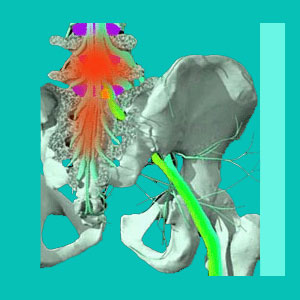
The cauda equina is the structure which consists of various spinal nerve roots which branch off the base of the spinal cord. The actual cord ends somewhere between the lower thoracic region and the upper lumbar region in most individuals. However, these spinal nerve roots continue throughout the remainder of the lumbar spine and serve the neurological needs of the lower body region.
CES occurs when two or more of these nerve roots are seriously compressed or injured. While some causes of CES are completely treatable, others might enact considerable and permanent nerve injury.
It should be noted that a single lumbar or sacral nerve root which is affected does not qualify as true cauda equina syndrome, but instead should be considered a compressive neuropathy, even when it occurs within the central canal.

Cauda Equina Symptomology
The most common symptom of this condition is acute pain. Most affected individuals will report serious lower back pain and possible related sciatic nerve symptoms which might include tingling, weakness or numbness anywhere in the lower anatomy.
Loss of bladder and/or bowel control is also very common, usually in association with saddle paresthesia. Some patients can not urinate or void, while others can not prevent accidental discharge of urine or feces.
The sexual organs are also often targeted by this condition, preventing proper function in both males and females. Genital pain is possible and might be very severe.
Cauda Equina Syndrome and Herniated Discs
CES can occur from a herniated disc in very rare circumstances. Typically this happens from extreme trauma to the lower spine and rarely results from spinal degeneration. Car accidents and other massive injuries are the usually causes of CES in the majority of patients.
CES can occur from other spinal conditions as well, including spinal stenosis, drastic spinal curvature and some congenital abnormalities.
Remember, most herniated discs will not cause any serious or lasting pain and will only cause CES-type syndromes in the most extreme of pathological circumstances.

Cauda Equina Guidance
CES is no condition to play around with. If you notice the telltale bladder, bowel or sexual organ symptoms related to a possible CES condition, go directly to a hospital.
The faster you receive evaluation and treatment, the better, since spinal nerves are very delicate structures. The longer they must endure injury, the greater the chance that some or all of the damage might become permanent.
CES is rare, but the condition can be a life-altering experience and not in a good way.
Herniated Disc > Herniated Disc Diagnosis > Cauda Equina Syndrome