
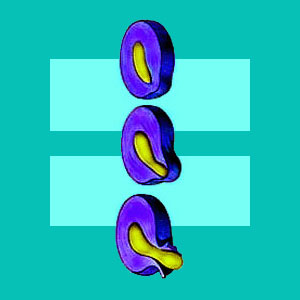
Understanding intervertebral disc anatomy is the first step in defeating herniated disc pain. A disc is a soft tissue which helps to cushion the vertebral bones inside the spine. Without intervertebral discs, the spine would simply be a rigid column of bone, but with the addition of discs, the spine is a marvel of strength and flexibility. The human spine is one of the main reasons for our continuing success as a species and its natural design is completely dependent upon the inclusion of the intervertebral disc structures.
This essay will provide details on the exact composition of the intervertebral discs.
Intervertebral Disc Anatomy Facts
There are a total of 23 spinal discs in the vertebral column. There are 5 in the cervical levels, 11 in the thoracic levels, 4 in the lumbar spine and 3 at the junctions between these regions.
At each frontier, there is a transitional disc. The cervicothoracic disc exists at C7/T1. The thoracolumbar disc exists at T12/L1. Finally, the lumbosacral disc exists at L5/S1.
Discs are composed of simple organic compounds consisting mostly of water, proteoglycans and collagen.
The spinal discs sit in between each vertebral bone, facilitating smooth movement and an extended range of motion. Discs also act as shock absorption structures for the spine.

Discs help create the spinal curves, which assist in distributing weight and force throughout the body.
The combined height of all the discs makes up about one quarter of the total length of the spine.
Discs do not have interior blood vessels and receive all their nutritional requirements through cartilaginous end plates, which attach each disc to the vertebra above and below it.
Structural Spinal Disc Anatomy
The outer wall of the disc is called the annulus fibrosus. It consists of many durable woven layers of cells and is made up of fibrocartilage bonded together with strands of collagen. The woven design of this outer wall is very strong and helps the disc to resist the huge loads and forces placed on it by all of our spinal movements.
The inner section of the disc is called the nucleus pulposus. This soft jelly-like core is saturated with moisture and is very flexible. The nucleus is made up of polysaccharide gel, once again bonded with collagen molecules. The inner core of the disc is constantly hydrating and dehydrating as part of its normal day to day activity.
As we age, the nucleus loses its ability to effectively hold moisture, thereby shrinking in mass, height and circumference. This harmless and expected process is called disc desiccation, although the back pain industry typically refers to it as degenerative disc disease.

Amazing Intervertebral Disc Anatomy
Discs are responsible for providing the grace to complement our brawn. They facilitate an incredible range of activities that we, as humans, have exploited to become the greatest species on this planet.
Discs have also been vilified by the medical community and blamed for countless varieties of neck and back pain. According to many doctors, their normal life processes, which have occurred for millenia, are suddenly to blame for the huge incidence of back pain we have seen in the past 70 years.
Are our discs changing and losing their structural abilities that fast? Of course not. They are simply being targeted by a profit-driven treatment agenda which has elevated the words herniated disc to a height of fear and intimidation never before imagined.
Herniated Disc > Intervertebral Discs > Intervertebral Disc Anatomy