
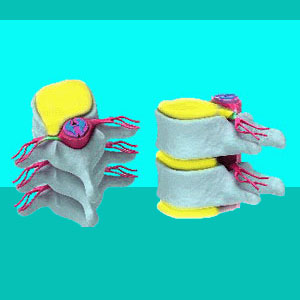
A focal herniated disc may also be known by various other names, including focal disc bulge, focal disc protrusion or focal prolapsed disc. This type of herniated disc is one of the least severe in many instances, although focal protrusions can certainly enact symptoms in rare cases. Focal disc herniations can be detected using advanced diagnostic imaging tools, such as spinal MRI or CT scan. Notations of focal disc bulging on diagnostic imaging studies are what inspire readers to learn more about the specific connotations of focal intervertebral abnormalities.
This article will define the exact meaning of a focal disc bulge and will compare and contrast focal herniations to other varieties of disc pathology.
Focal Herniated Disc Terminology
The addition of the term focal to any herniated disc diagnosis simply refers to the size of the actual bulging section of the disc. When the size of the bulge is determined to be less than 25% of the total disc circumference, the disc issue is described as being focal. When the degree of bulge is more than 25% and less than 50%, the disc is said to have a broad based herniation condition. Sometimes, the focal bulge is detailed on a circular map, in which case the herniated portion of the disc is said to be less than 90 degrees of the total possible 360 degrees.
Focal or broad based is usually quite irrelevant when it comes to patient’s symptoms. Most simply hear the words herniated disc and fear for their lives. This is common, but it is crucial that all patients understand the true facts about herniated discs before panicking from a positive disc diagnosis.

Focal Bulging Disc Variations
Focal bulges can occur in the center of the disc and would be called a central herniated disc, which are almost always posterior facing. Focal bulges may also occur to either side of the center line of the disc, which are called lateral or posterolateral herniated discs.
The bulge may decrease in size by itself over time or it may not. Some bulges worsen with time and activity. However, regardless of how the bulge changes in size is usually quite unrelated to symptoms experienced. Many large herniations are completely innocent of causing any pain, while some minor bulges are theorized to be the source of horrific back pain.
Remember that most herniated discs are not harmful and all patients are advised to compare expected symptoms to the actual clinical expression in order to avoid becoming a victim of incredibly common misdiagnosis.
Focal Herniated Disc Diagnosis
Many patients get caught up in terminology rather than seeing the big picture. Having a focal herniation or broad based herniation rarely makes a difference. It is simply a classification used by physicians to describe how the disc has changed in response to normal spinal degeneration or traumatic disc injury. However, just that fact that you are here reading this page gives me hope, since it shows that you are taking an active interest in your own care, which is the most vital part of the recovery process. Keep it up!
Learn all you can about your condition and use that knowledge to defeat the pain. Remember, structural disc issues generally respond well to appropriate therapy. If your pain remains despite active treatment, there is a good possibility that the disc bulge may be coincidental to the symptoms, which means back to the drawing board. At least it is better to know sooner rather than later. It took me years to figure this out.
Herniated Disc > What is a Herniated Disc > Focal Herniated Disc